Unmasking the Hidden Faces of Nobility: The “Black” and “Brown” Lords of Early Modern England
Source: John Macky, Memoirs of the Secret Services of the Reigns of King William, Queen Anne, and King George I (1733 edition and later printings)
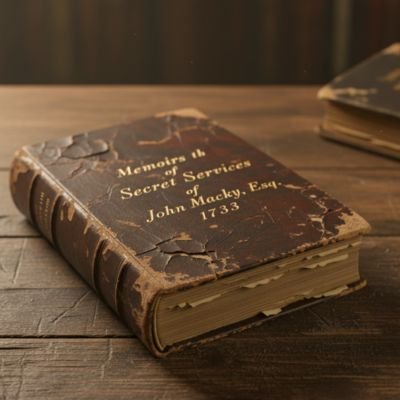
When most people picture Britain’s nobles of the 1600s and 1700s, they imagine powdered wigs and porcelain faces. Yet the eyewitness record tells a different story. In his Memoirs, political observer John Macky described the most powerful men in the kingdom — dukes, bishops, admirals, and royal sons — using plain words that today sound revolutionary: black, brown, swarthy, and tawny.
What emerges is a hidden portrait of Britain’s leadership, centuries before race was rewritten into myth.
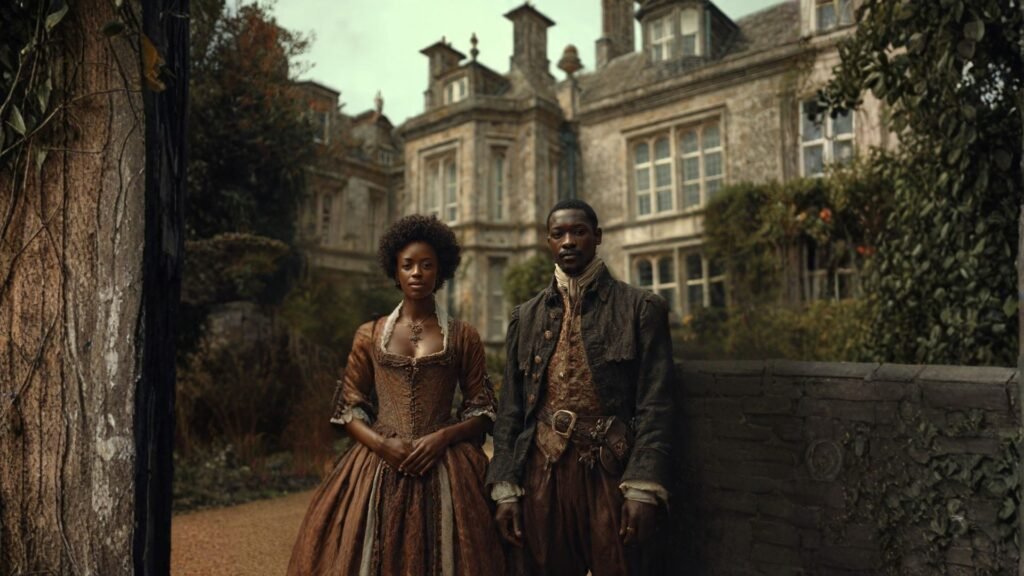
The “Black” Nobility of Britain
Sidney, Lord Godolphin (†1712) — The Lord High Treasurer of England, “of a very black and stern countenance.” Macky praised his intellect, steady temperament, and mastery of finance (Memoirs, p. 7).
Daniel Finch, Earl of Nottingham — A “tall, thin, very black man, like a Spaniard or Jew,” formal and austere, a churchman and staunch Tory (Memoirs, p. 15).
Charles Seymour, Duke of Somerset — Middle stature, “very black complexion,” a lover of music and poetry (Memoirs, p. 22).
John Holles, Duke of Newcastle — Described as a “black, ruddy complexioned man,” one of the richest landowners in England (Memoirs, p. 28).
Charles Lennox, Duke of Richmond — Son of King Charles II; “black complexion, much like King Charles.” (Memoirs, p. 34).
George Fitzroy, Duke of Northumberland — Also a son of Charles II, “a tall black man, like his father the King.” (Memoirs, p. 36).
Charles Beauclerk, Duke of St. Albans — “Black complexion, not so tall as the Duke of Northumberland, yet very like King Charles.” (Memoirs, p. 39).
Charles Fitzroy, Duke of Grafton — Grandson of Charles II, “a tall black man, about twenty-five years old.” (Memoirs, p. 41).
Basil Fielding, Earl of Denbigh — “Tall, fat, very black, and turned of forty.” (Memoirs, p. 45).
Earl of Kingston (Pierpoint family) — A “black complexion, well made, not forty years old.” (Memoirs, p. 47).
Dr. John Sharp, Archbishop of York — “A black man… one of the greatest ornaments of the Church of England.” (Memoirs, p. 51).
Mr. Methuen, Ambassador to Portugal — A “tall, black man… much of a Spaniard in manners.” (Memoirs, p. 55).
William Johnston, Marquis of Annandale — “Tall, lusty, and well-shaped, with a very black complexion.” (Memoirs, p. 59).
William Kerr, Marquis of Lothian — “Very handsome, black, with a fine eye.” (Memoirs, p. 61).
Lord Belhaven (Hamilton branch) — “A rough, fat, black, noisy man, more like a clown than a lord.” (Memoirs, p. 63).
Charles Middleton, Earl of Middleton — “A black man… one of the pleasantest companions in the world.” (Memoirs, p. 66).
John Drummond, Earl of Melfort — “Tall, black, stoops in the shoulders, thin.” (Memoirs, p. 69).
Lord Forbes — “Good-natured gentleman, very tall and black.” (Memoirs, p. 72).
Across class and continent, Macky used the same description again and again — black. Not metaphorically, not politically — physically.
The “Brown,” “Swarthy,” and “Tawny” Gentlemen
Below the “very black” entries are dozens of nobles and officers described as brown-complexioned. Their ranks include England’s intellectuals, admirals, and parliamentarians.
John Sheffield, Duke of Buckinghamshire — “Brown complexion, sour lofty look.” (Memoirs, p. 75).
Laurence Hyde, Earl of Rochester — “Well-shaped, brown complexion.” (Memoirs, p. 78).
William Cavendish, Marquis of Hartington — “Brown complexion, taller than middle stature.” (Memoirs, p. 80).
John Lord Somers — “Middle stature, brown complexion.” (Memoirs, p. 82).
Algernon Capell, Earl of Essex — “Well-bred, brown-complexioned, well-shaped.” (Memoirs, p. 85).
Earl of Feversham (Duras family) — “Middle-statured brown man.” (Memoirs, p. 87).
George Neville, Lord Abergavenny — “Little brown man, very lovely.” (Memoirs, p. 90).
Robert Sutton, Lord Lexington — “Handsome, of a brown complexion.” (Memoirs, p. 92).
Nevil Lord Lovelace — “Short, fat, brown man.” (Memoirs, p. 94).
Ford Lord Grey of Werk — “Thin, brown, handsome man.” (Memoirs, p. 96).
Richard Boyle, Earl of Scarborough — “Handsome man, of a brown complexion.” (Memoirs, p. 98).
Sir George Rooke — “Stern-looked man, brown complexion, well-shaped.” (Memoirs, p. 101).
James Vernon — “Tall, thin, brown-complexioned, with an Austrian lip.” (Memoirs, p. 103).
Col. Matthew Aylmer — “Handsome in person, a brown man.” (Memoirs, p. 106).
Andrew Fletcher of Salton — “Low, thin, brown complexion, full of fire.” (Memoirs, p. 108).
Earl of Arrol (Haye family) — “Brown complexion, middle stature.” (Memoirs, p. 110).
Even the swarthy and tawny shades appear:
Sir Stafford Fairborne — “Fat, swarthy, of a brown complexion.” (Memoirs, p. 113).
Mr. Aglionby — “Thin, splenatic, tawny-complexioned.” (Memoirs, p. 115).
These were not laborers or foreigners — they were the English elite.
A Pattern the Paintbrush Erased
Across nearly every entry, Macky repeats a truth our portraits later denied: the British governing class was visibly brown and black. These descriptors were not insults but identifiers—normal observations within his era’s vocabulary.
In later centuries, oil painters, genealogists, and revisionist historians gradually lightened those faces. The lineage that once wore its dark complexion openly was literally whitewashed into myth.
Why It Matters
Memoirs of John Macky gives us the closest thing to a photograph of early-1700s Britain—a contemporaneous witness describing what he saw. His notes quietly record a multiracial reality at the heart of European power.
Revisiting these words through B1 Decoded means restoring the truth that was edited out:
Before the colonies, before the caricatures, Black and brown nobility ruled the halls of England.
📚 Primary Source Reference
John Macky, Memoirs of the Secret Services of the Reigns of King William, Queen Anne, and King George I: Including the Author’s Correspondence with the Most Eminent Persons at the Courts of England and Scotland (London, 1733; also reprinted in “Memoirs of John Macky, Esq.” 1760 edition).
Descriptive passages appear between pages 7 and 115 of the 1733 text.